What’s the difference between a green card and U.S. citizenship?
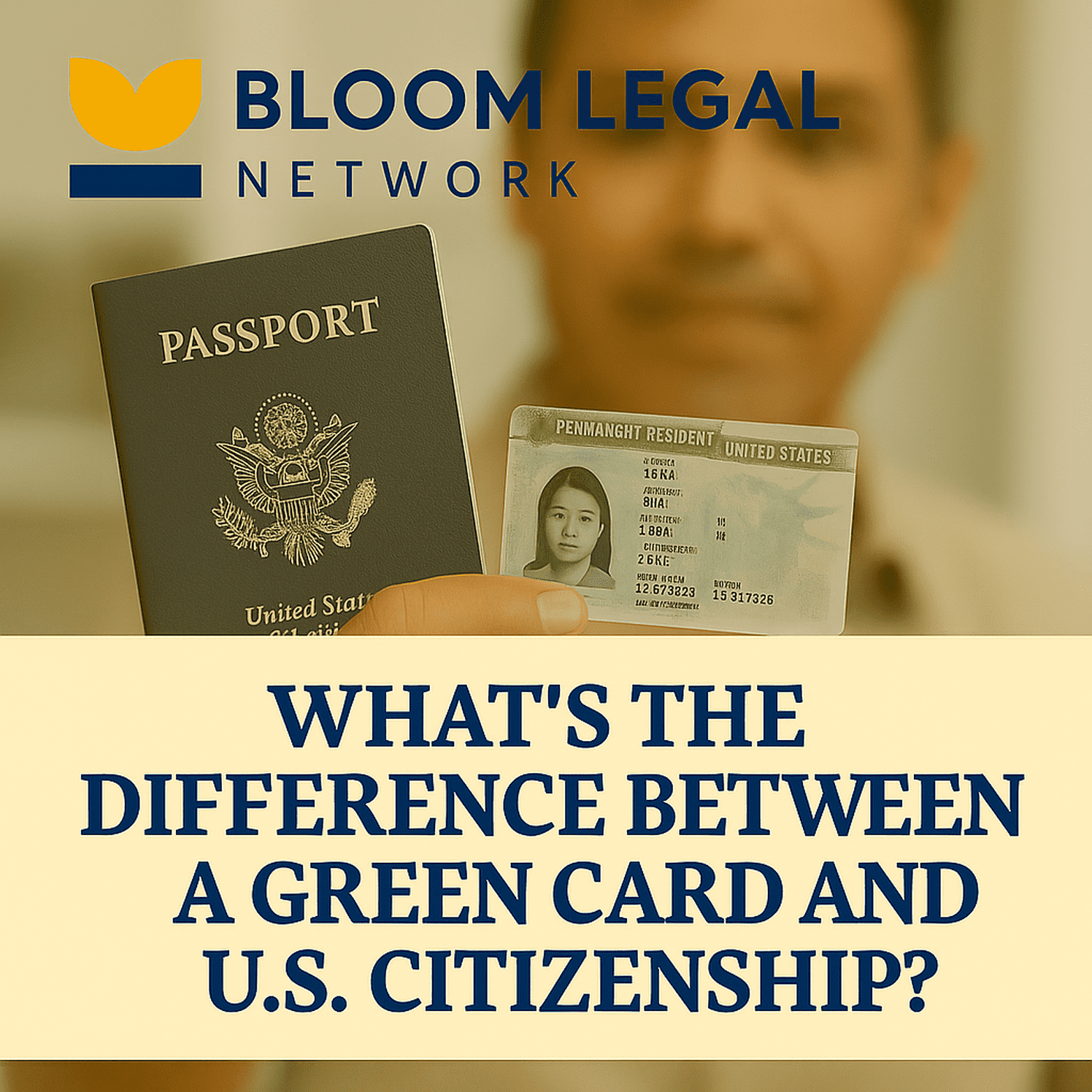
What’s better — a green card or U.S. citizenship?
Becoming a permanent resident or a citizen of the United States is a life-changing achievement. For many families in Louisiana, securing legal status means stability, opportunity, and peace of mind. But even once you have legal residency, a common question remains: What’s the difference between a green card and U.S. citizenship?
In this comprehensive guide, we break down the key differences between having a green card and being a U.S. citizen, including your rights, responsibilities, and path to the future—so you can make the best decision for your family. We will explore the nuanced benefits of U.S. citizenship over a green card, focusing on the long-term security that matters most to residents of the Gulf Coast.
What is a Green Card?
A green card—officially called Lawful Permanent Resident (LPR) status—gives you the legal right to live and work in the United States indefinitely.
Green card holders can:
- Live anywhere in the U.S., including St. Tammany Parish, Jefferson Parish, and beyond.
- Work for any employer (with limited exceptions in federal roles).
- Attend school and qualify for some government benefits.
- Travel abroad—though with restrictions.
It’s a major milestone toward long-term stability. But it’s not the finish line.
Green Card Limitations: The Risk That Citizenship Eliminates
While permanent residency is secure, it still comes with risks and restrictions that a U.S. citizen doesn’t face. Understanding these limits is critical when weighing a green card vs. citizenship.
| Limitation | What It Means |
| Can be taken away (Deportation Risk) | Certain crimes or immigration violations can lead to deportation. Green card holders are still subject to removal proceedings. |
| Renewals required | Must renew the green card every 10 years, which involves paperwork, fees, and the risk of complications if documentation is incomplete. |
| Restricted voting | Green card holders cannot vote in federal, state, or most local elections—limiting civic participation. |
| Travel limits | Long trips abroad (typically over 6-12 months) may lead to losing status due to a perceived abandonment of U.S. residency. |
| Sponsorship rules | More limited ability to sponsor family members for immigration compared to a U.S. citizen. |
If your life is firmly rooted in Louisiana—family, work, home—these limits may feel uncomfortable over time. The only way to eliminate the risk of deportation entirely is through U.S. citizenship.
What is U.S. Citizenship?
U.S. citizenship provides the full legal rights and protections of the United States—with benefits that touch every part of your life. It is the final, most secure step in the immigration journey, granting privileges that a green card simply cannot.
Citizens can:
- Vote in federal, state, and local elections.
- Apply for U.S. passports for easier international travel.
- Sponsor a wider range of family members for immigration, including parents, siblings, and married children.
- Access more government programs and financial aid without the limitations some green card holders face.
- Apply for federal employment, including jobs with the military and high-level security clearances.
- Never lose citizenship due to deportation. This is the ultimate security benefit.
Citizenship means true security and belonging—in New Orleans, Metairie, and every corner of the U.S.
Key Differences: Green Card vs. Citizenship
This table highlights the fundamental ways in which holding a green card differs from being a U.S. citizen.
| Category | Green Card Holder | U.S. Citizen |
| Deportation Risk | ✅ Yes (Can lose status) | ❌ No (Immunity to Deportation) |
| Voting rights | ❌ Not allowed | ✅ Full rights in all elections |
| Passport | ❌ Cannot get U.S. Passport | ✅ U.S. passport access |
| Family sponsorship | Limited to spouse and minor children | Expanded (includes parents, siblings, married children) |
| Government jobs | Limited access (e.g., security clearances) | Full access |
| Renewal | Required every 10 years | None (Status is permanent) |
Put simply: A green card gives you security. Citizenship gives you freedom and permanence.
Expanded Benefit: The Power of Sponsorship
A major difference that significantly impacts families in Louisiana is the power of sponsorship. As a U.S. citizen, your ability to petition for family members is vastly superior to that of a green card holder. This means faster processing times and the ability to bring a broader circle of loved ones to live permanently in the United States, cementing your family’s future security. This benefit alone is often the decisive factor for many pursuing U.S. citizenship.
How to Become a U.S. Citizen (Naturalization)
The path from a green card to U.S. citizenship is called Naturalization. Most green card holders become eligible after:
- ⏱️ 5 years of permanent residency (and meeting physical presence requirements).
- —or—
- ⏱️ 3 years if married to a U.S. citizen (and meeting additional requirements, including being married for the entire three-year period).
Not everyone qualifies right away, and the naturalization process requires:
- Showing good moral character (free of disqualifying criminal history or immigration violations).
- Passing a civics and English test (demonstrating knowledge of U.S. history and government).
- Paying filing fees and completing the application (Form N-400).
- Completing an in-person interview.
Bloom Legal Network can help you understand your eligibility and avoid common mistakes that delay or jeopardize applications for U.S. citizenship. We focus on ensuring your application meets all the strict requirements of USCIS.
Why U.S. Citizenship Matters in Louisiana: Beyond the Ballot Box
For families in Hurricane-prone areas like Jefferson Parish, St. Charles Parish, and New Orleans, U.S. citizenship can have a direct, non-political impact on your daily life and financial stability.
- ✅ Access to Recovery Programs: In the wake of a disaster, federal and state recovery aid (like FEMA assistance) often prioritizes or limits access based on citizenship status. Being a citizen can simplify and secure your family’s ability to rebuild.
- ✅ Financial Stability: Many high-level federal jobs and certain forms of government financial aid or grants are reserved exclusively for U.S. citizens.
- ✅ Long-Term Security: A U.S. citizen can leave the country for extended periods without fear of jeopardizing their status, providing true freedom and flexibility.
Citizenship protects the life you’ve built—no matter what natural or legal challenges arise.
Which one should you choose? Green Card or U.S. Citizenship?
The decision between holding a green card and pursuing U.S. citizenship depends on your long-term goals.
If you want:
- Protection from deportation (the ultimate security).
- The ability to vote and participate fully in democracy.
- Security for future generations through expanded sponsorship rights.
- Confidence that nothing can ever take your status away.
- ➡️ Citizenship is the stronger, permanent choice.
If you are still building stability—gathering documents, establishing work history, or resolving past issues—maintaining a green card first may make sense until you meet the requirements for good moral character and continuous residency.
Every journey is unique. We help you choose the path that serves your future.
Bloom Legal Network Stays by Your Side
Immigration cases are personal. They affect families, futures, and peace of mind.
At Bloom Legal Network, we:
- Guide individuals and families through the entire naturalization process.
- Connect you with trusted immigration attorneys when needed.
- Stay involved from start to finish—protecting your rights and goals.
📞 Call us at 504 599 9997 to move one step closer to the life you deserve.
FAQs: Answering Common Questions About Green Cards and Citizenship
1️⃣ How long does it take to go from a green card to U.S. citizenship?
Most people qualify for naturalization after 5 years of having a green card (or 3 years if married to a U.S. citizen). The application (Form N-400) and interview process can take several months to over a year based on local processing times in New Orleans and throughout Southeast Louisiana.
2️⃣ Can I lose my green card if I don’t become a citizen?
Yes—certain convictions, immigration violations, or long absences from the U.S. can put permanent residency at risk. U.S. citizenship removes the possibility of deportation, offering far greater security than a green card.
3️⃣ Is it worth applying for citizenship if I already have a green card?
For most people—absolutely. Citizenship offers:
- Stronger legal protection (deportation immunity).
- Expanded rights (voting, federal jobs).
- Better protection for your family’s future (sponsorship).
We can help you weigh the benefits based on your specific situation.