Navigating Personal Injury Claims After a Louisiana Hurricane
If I get hurt during a hurricane evacuation — can I sue someone?
In Louisiana, hurricanes are a part of life — but when accidents happen during an already dangerous storm, the legal consequences can get complicated. Whether you’re evacuating during a mandatory order, navigating flood-damaged roads, or injured due to someone else’s negligence, understanding your legal options matters.
If you live in New Orleans, Metairie, Jefferson Parish, or anywhere in Southeast Louisiana, this guide explains how hurricane-related accidents are handled under Louisiana personal injury law — and what steps to take if you or someone you love gets hurt.
Common Types of Hurricane-Related Accidents in Louisiana
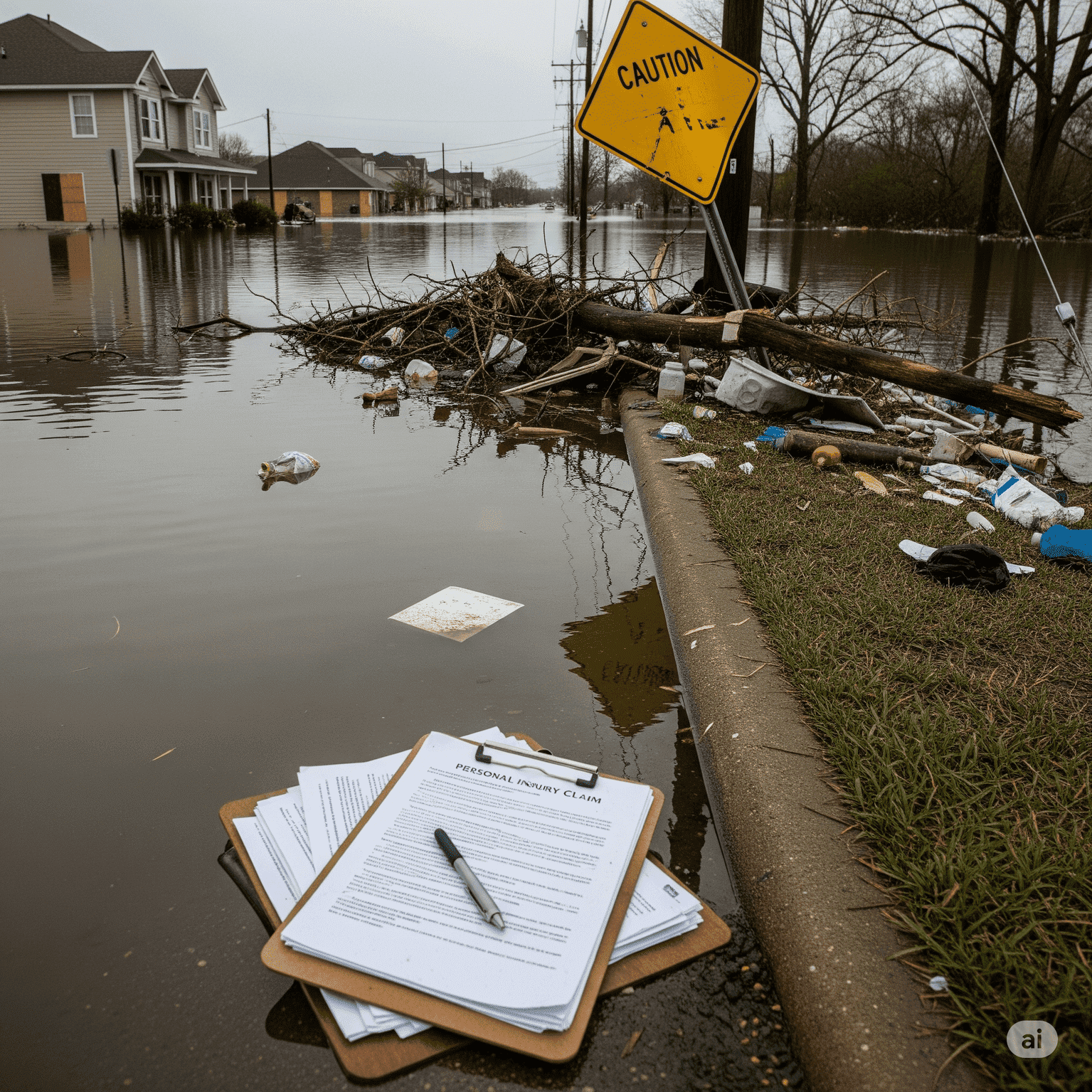
Even outside the direct path of a storm, hurricane season brings chaos: heavy traffic, unsafe property conditions, flooding, flying debris, and downed power lines. These situations create serious risk for injury — and they’re not always considered “acts of God” under the law.
Some of the most common personal injury claims we see during and after hurricanes in Southeast Louisiana include:
1. Car Accidents During Evacuation
Heavy evacuation traffic on roads like I-10 and Highway 90 increases the risk of crashes. If a driver is speeding, distracted, or ignoring traffic laws in the rush to evacuate, they may still be held liable for injuries — hurricane or not.
In places like St. Charles Parish, where rural roads meet main evacuation routes, we’ve seen multi-vehicle accidents where liability clearly rests with negligent drivers, not just the storm.
If you were injured in a car accident during a hurricane evacuation, contact Bloom Legal Network to find out if you have a claim.
2. Slip-and-Fall Injuries on Neglected Property
Storm prep and cleanup often leave hazardous conditions: wet floors, scattered debris, fallen tree branches, or missing safety signs. Property owners in Louisiana — including businesses — are still required to maintain safe conditions during hurricanes if it’s reasonable to do so.
In Jefferson Parish, for example, business owners who leave walkways blocked or fail to secure loose items that cause injury may be liable, even in the middle of storm recovery.
3. Injuries from Collapsing Structures or Poor Maintenance
If a property owner knew their roof was weak, failed to repair broken steps, or didn’t secure old signage — and you’re hurt as a result — they may be held accountable. This is especially true for landlords, commercial building owners, or property managers.
In New Orleans, where many buildings are older and storm-prone, poor maintenance is a frequent factor in injury claims after hurricanes.
Injured due to collapsing structures during a storm? Let Bloom Legal Network help you determine if a property owner’s negligence played a role.
Is It Harder to File a Personal Injury Claim During Hurricane Season?
It can be — but that doesn’t mean it’s impossible. Insurance companies may try to deny responsibility by blaming “unavoidable storm conditions.” But if your injury was caused (or worsened) by someone else’s negligence, they may still be legally responsible.
For example:
- If someone rear-ends you in heavy rain because they didn’t slow down — that’s still negligence.
- If a business failed to clean up water on the floor after the storm passed — that’s a hazard they could’ve prevented.
- If a landlord ignored known safety issues that collapsed during a storm — that’s poor property maintenance, not just bad luck.
Louisiana law still applies during a hurricane. Proving negligence may take more documentation, expert analysis, or witness statements — but it can be done.
Don’t assume you don’t have a case. Contact Bloom Legal Network to speak with a local personal injury attorney who understands hurricane-related liability.
How to Protect Your Personal Injury Claim During a Hurricane
Timing and documentation are crucial, especially when storms disrupt everything. If you’ve been injured in Metairie, St. Tammany Parish, or anywhere in Southeast Louisiana during hurricane season, follow these steps:
1. Seek Immediate Medical Attention
Even if hospitals are overwhelmed or delayed, try to get treatment as soon as it’s safe. Medical records help prove the severity and timing of your injuries.
2. Take Photos of the Scene
If possible, document the location, conditions, weather, hazards, and your injuries. Try to include wide shots and close-ups.
3. Get Contact Info from Witnesses
Ask for names, numbers, and any photos or videos they may have taken — especially in chaotic or crowded areas like evacuation centers or commercial stores.
4. Don’t Give a Statement to Insurance Adjusters Without Legal Advice
They may try to get you to say the accident was unavoidable due to the storm. Stick to the facts — and talk to a lawyer first.
Bloom Legal Network connects you with experienced Louisiana personal injury attorneys who know how to handle storm-season injury claims — even when insurers push back.
Why Hurricane Season Requires Local Legal Experience
A hurricane changes everything — but it doesn’t eliminate your rights. In places like St. Tammany Parish or Jefferson Parish, where flood zones, rural roads, and damaged infrastructure create layered risks, having a lawyer who knows the local terrain can be the difference between winning and losing your case.
From building codes to disaster declarations, each parish may have different rules or timelines that impact your claim. Don’t risk your compensation by going it alone.
If you’ve been injured during or after a hurricane, let Bloom Legal Network connect you with a Louisiana lawyer who knows how to fight for what you’re owed.
Know Your Rights During Hurricane Season!
Personal injury claims don’t disappear just because a storm hit. If you were injured during a hurricane evacuation, storm prep, or cleanup — and someone else’s negligence contributed — you may have a valid claim under Louisiana law.
Don’t wait until the chaos dies down to ask questions. Whether you’re in New Orleans, Metairie, or St. Charles Parish, take the first step toward protecting your health and your legal rights.
📞 Call Bloom Legal Network at 504-599-9997
📧 Email us at info@bloomlegal.com
Let us help you navigate the legal aftermath — so you can focus on healing!
Frequently Asked Questions
Yes, depending on the circumstances. If your injury was caused by another driver’s negligence, a poorly maintained property, or a business failing to secure its premises, you may have grounds for a personal injury claim. Even during a state of emergency, people and businesses are still responsible for exercising reasonable care. A local attorney can help evaluate liability and guide you through next steps.
Possibly. Property owners, employers, and contractors still owe a duty of care during cleanup. If you slipped on an avoidable hazard, were hit by debris due to improper handling, or were injured by faulty equipment, you may be entitled to compensation. Documentation, photos, and medical records are key to proving negligence during storm recovery.
It depends on the policy, the type of accident, and who was at fault. Some insurers may try to deny coverage by blaming “acts of God,” but that defense doesn’t apply when human negligence is involved. Whether it’s a car crash, a premises injury, or a workplace accident during hurricane prep or cleanup, liability may still fall on the person or business responsible — and insurance should respond accordingly.