
How to File a Lien in Louisiana: A Guide for Contractors, Suppliers, and Property Owners
When it comes to construction projects in Louisiana, getting paid on time and in full isn’t always guaranteed. Whether you’re a contractor, subcontractor, or materials supplier, the law gives you a powerful tool to protect your right to payment: filing a lien.
A construction lien, also known as a mechanic’s lien in other states, can secure the money you’re owed by placing a legal claim on the property you worked on. But Louisiana’s lien laws are highly specific, time-sensitive, and unforgiving if you miss key deadlines or required steps.
In this post, we’ll walk you through how to file a lien in Louisiana, who’s eligible, what deadlines apply, and how a Louisiana construction law attorney can help you assert your rights effectively.
What Is a Construction Lien in Louisiana?
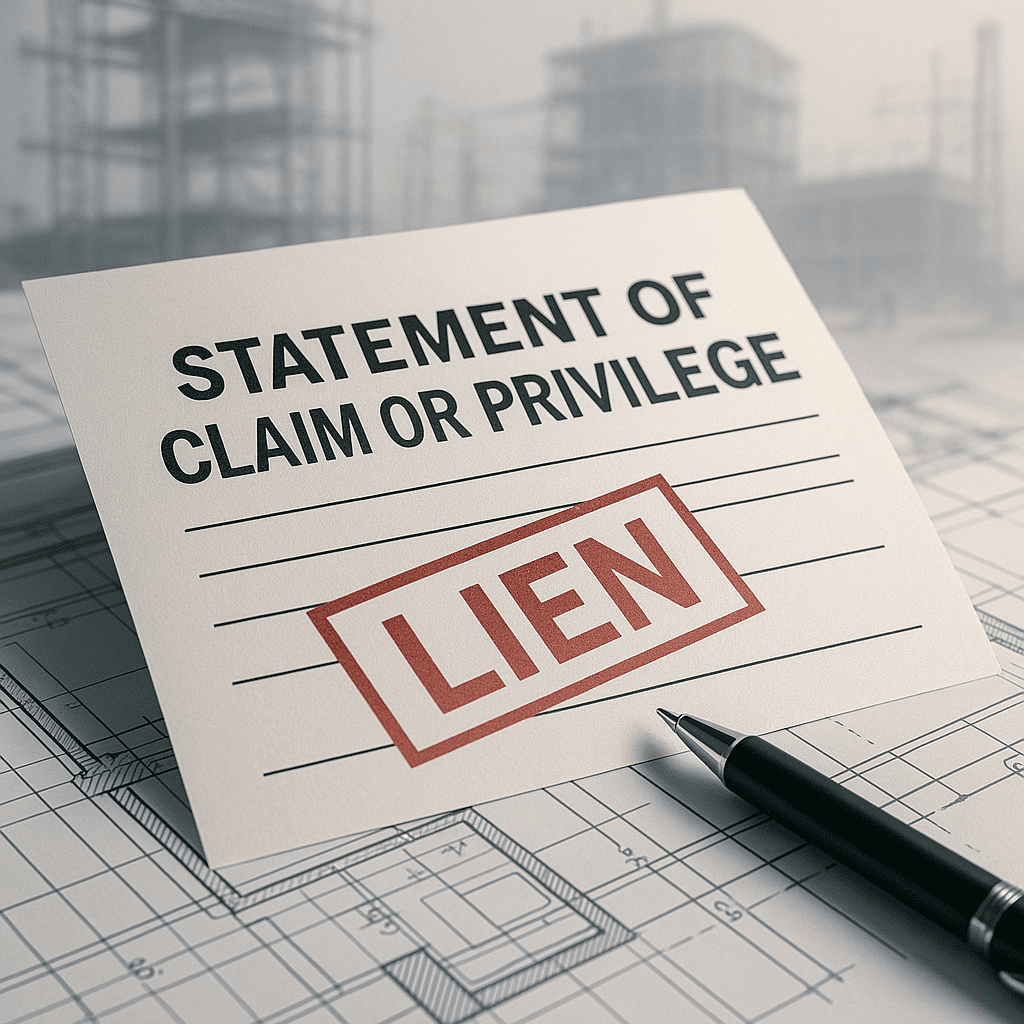
In Louisiana, liens related to construction or renovation work fall under what’s known as a “Statement of Claim or Privilege” under the Private Works Act. This legal filing gives unpaid workers or suppliers a security interest in the improved property, which can eventually lead to a forced sale of the property if payment is not made.
Liens can be filed for:
- Labor performed
- Materials supplied
- Equipment rental
- Design or architectural work
Whether you’re working in New Orleans, St. Charles Parish, Metairie, or elsewhere in Louisiana, understanding the lien process can help you avoid costly mistakes and delays.
Who Can File a Lien in Louisiana?
Louisiana law provides lien rights to a wide range of parties involved in construction work. This includes:
- General contractors
- Subcontractors
- Material suppliers
- Equipment lessors
- Architects and engineers
- Laborers
But your rights depend on your contractual relationship to the property owner. For example:
- General contractors must file a “Statement of Claim or Privilege.”
- Subcontractors and suppliers may also need to deliver a Notice of Nonpayment or Notice of Intent to Lien before filing a lien, depending on the project type.
Don’t risk losing your lien rights—consult a Louisiana construction attorney early in the process to determine your exact requirements.
Step-by-Step: How to File a Lien in Louisiana
1. Know the Deadlines
Timing is everything. If you miss a filing deadline, your lien may be completely invalid.
- Residential projects (single-family home):
- Subcontractors/suppliers: Must file within 60 days of the filing of the Notice of Termination of the work.
- If no termination is filed: Must file within 60 days of project completion.
- Subcontractors/suppliers: Must file within 60 days of the filing of the Notice of Termination of the work.
- Commercial or public works:
- Subcontractors/suppliers: Must file within 60 days of project completion or filing of notice of termination.
- General contractors: Must file within 30 to 60 days, depending on whether a notice of termination was filed.
- Subcontractors/suppliers: Must file within 60 days of project completion or filing of notice of termination.
Important: Louisiana’s lien laws are complex and vary depending on project type. To avoid losing your right to payment, it’s crucial to act fast and document everything.
2. Prepare Your Statement of Claim or Privilege
This legal document must include:
- Your name and address
- The name of the property owner
- A description of the work or materials supplied
- The total amount owed
- A description of the property (usually via municipal address or legal description)
- The date of last work or delivery
The claim must be signed and notarized.
👉 Need help getting the wording right? A construction lawyer in Louisiana can draft and file this document accurately and on time.
3. File with the Parish Clerk of Court
You must file the lien in the Clerk of Court’s office in the parish where the property is located. For example, if the construction site is in New Orleans, you’ll file with the Orleans Parish Clerk of Court.
Check each parish’s specific rules, they may have unique formatting or submission requirements.
4. Serve a Copy on the Property Owner
After filing, you must send a copy of the lien to the property owner. This is typically done via certified mail with return receipt requested, and the sooner the better.
Failure to notify the property owner may render your lien unenforceable. Don’t skip this step!
5. Enforce the Lien (If Needed)
Filing a lien is a powerful tool, but it doesn’t guarantee payment. If the property owner still refuses to pay, you’ll need to file a lawsuit to enforce the lien—typically within one year of filing the lien.
Don’t wait too long. If you miss the enforcement deadline, your lien becomes legally invalid.
Why It’s Smart to Work with a Construction Attorney
Filing a lien in Louisiana isn’t a “fill out the form and you’re done” process. Between strict deadlines, procedural rules, and required notices, a small misstep can result in losing your right to recover payment.
An experienced construction law attorney in New Orleans or anywhere in Louisiana can help:
- Identify your lien eligibility
- Calculate your exact filing deadlines
- Draft and file your lien properly
- Communicate with property owners or general contractors
- Represent you in court if enforcement is necessary
Need help with a lien or payment dispute? Don’t risk losing what you earned. Contact Bloom Legal Network and connect with a skilled Louisiana construction lawyer today.
Protect What You’ve Built
If you’ve completed work or supplied materials on a Louisiana construction project and haven’t been paid, file a lien Louisiana — it may be your best path forward. But the rules are complex and the deadlines are short.
At Bloom Legal Network, we help clients across New Orleans, Metairie, St. Charles Parish, and throughout Louisiana protect their financial interests and navigate construction disputes with confidence.
📞 Call us today at 504-599-9997
📧 Email info@bloomlegal.com
Don’t Let Missed Deadlines Cost You Thousands!
Construction work is hard. Getting paid shouldn’t be. If you’re owed money for your labor or materials in Louisiana, take action now, before your lien rights expire.
Let us help you protect what you’ve worked hard for!