
How to File a Hurricane Property Damage Insurance Claim
Filing a Hurricane Damage Insurance Claim in Louisiana? Here’s What You Need to Know
For residents of Southeast Louisiana, preparing for a hurricane is second nature. But when a storm passes and you’re faced with damage to your home, a different kind of challenge begins: the insurance claim process. Filing a claim is your first formal step toward recovery, and how you handle it can determine whether you receive the full funds needed to rebuild or are left short by your insurer. If you’re ready to take action, learn how to file a hurricane property damage claim the right way from day one.
This process is more than just filling out paperwork; it’s about building a comprehensive case for your losses. Insurance companies scrutinize every detail, and simple mistakes can lead to significant delays, underpayments, or even denials.
This guide provides a clear, step-by-step approach to filing your hurricane property damage claim effectively. The attorneys at Bloom Legal Network have guided countless homeowners through this exact process, ensuring their claims are positioned for the best possible outcome from day one.
Step 1: Immediate First Moves—Notice and Documentation
Before you can file a complete claim, you must take two immediate actions: notify your insurer and document everything.
- Provide Prompt Notice: Your insurance policy requires you to notify the company of a loss “promptly” or “as soon as practicable.” Do not delay. Call your insurance agent or the claims hotline number on your policy declarations page. When you call, simply state your name, policy number, and that your property at [your address] sustained damage from the hurricane. Note the date, time, and the name of the person you spoke with.
- Comprehensive Documentation: As we’ve detailed before, evidence is everything. Before cleaning up, take extensive photos and videos of all damage. This visual proof is invaluable and will form the backbone of your claim. This is a critical step for homeowners everywhere, from the suburban neighborhoods of Metairie to the coastal communities of St. Charles Parish.
Step 2: Formally Submitting Your “Proof of Loss”
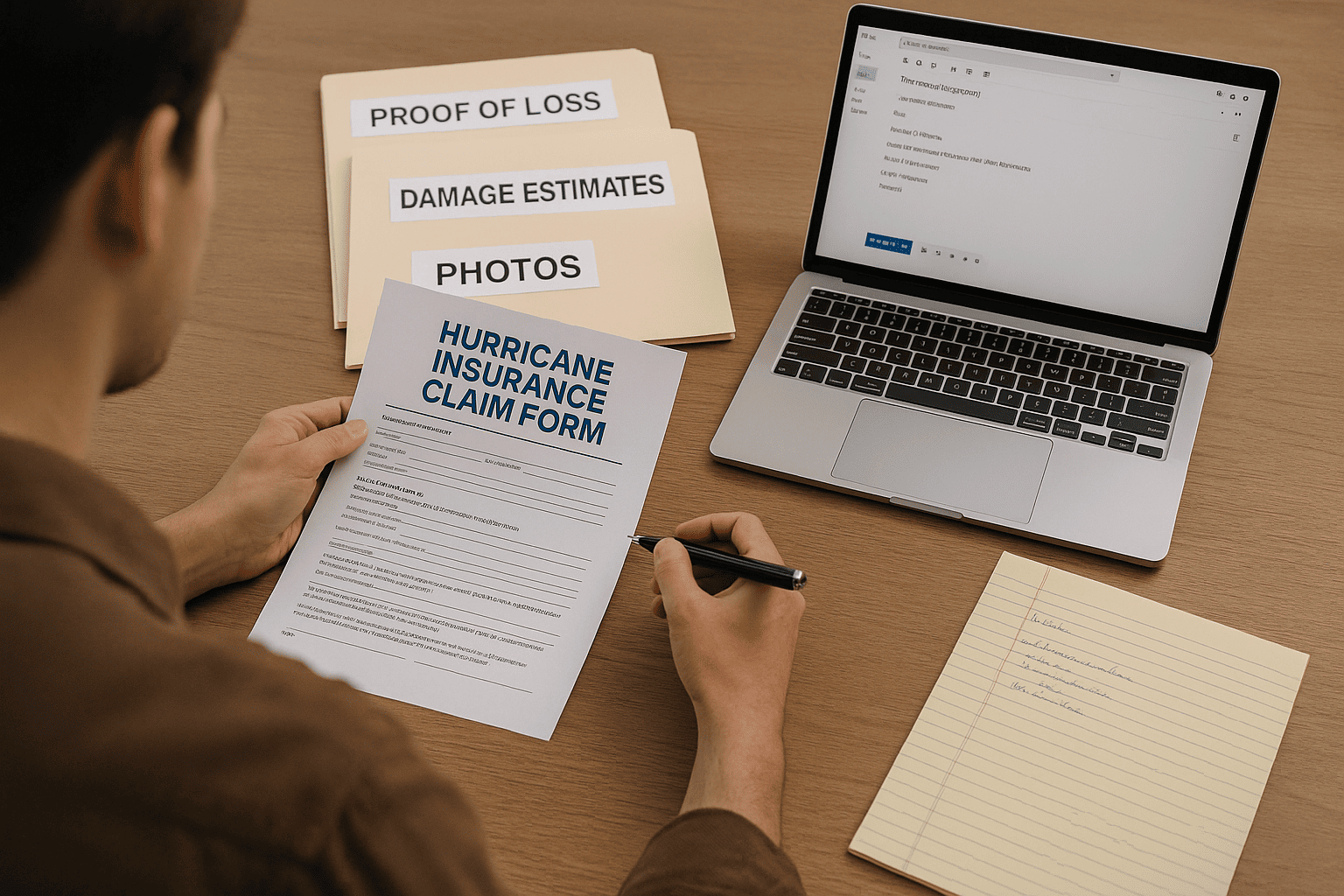
After the initial notice, the most critical document you will submit is the “Proof of Loss” (POL). This is a formal, sworn statement detailing the scope and amount of your claimed damages. Your insurance company will likely send you a blank form, but how you fill it out is crucial.
- What is a Proof of Loss? It is a legal document where you formally declare the value of your property that was damaged or destroyed. It requires detailed information and is signed by you under oath.
- Be Detailed and Accurate: Your POL should itemize your losses. This includes structural damage (roof, walls, foundation) and personal property (furniture, electronics, clothing). Attach your contractor’s estimates and your personal property inventory list.
- Don’t Rush It: An insurer might pressure you to submit the POL quickly. However, submitting an incomplete or inaccurate POL can severely limit your ability to claim additional damages later if more issues are discovered. It is often wise to wait until you have a thorough assessment from a trusted, independent contractor.
Submitting a comprehensive Proof of Loss is a legal requirement that can make or break your claim. If you are unsure how to accurately complete this sworn statement, the team at Bloom Legal Network can connect you with a professional who understands precisely what insurers require.
Step 3: Understanding What You Are Filing For
A hurricane claim isn’t just for the obvious structural damage. A complete claim includes every single loss you have suffered. Ensure you are accounting for:
- Structural Repairs: The cost to repair or rebuild the damaged parts of your home.
- Personal Property: The value (either replacement cost or actual cash value, depending on your policy) of all damaged contents.
- Debris Removal: The cost to remove fallen trees and other debris from your property.
- Additional Living Expenses (ALE): If your home is uninhabitable, your policy likely covers the costs of temporary housing, meals, and other essentials above your normal living expenses. Many residents of New Orleans and Jefferson Parish have had to rely on ALE after major storms, but it’s often a part of the claim that is underpaid.
Step 4: Navigating the Adjuster and Estimates
Once your claim is filed, your insurer will assign a claims adjuster. Remember, this adjuster works for the insurance company.
- Get Your Own Estimates: Never rely solely on the insurance adjuster’s estimate. They are often trained to minimize costs. Obtain at least two detailed, itemized estimates from reputable, licensed, and insured local contractors who are experienced in storm restoration.
- Review the Adjuster’s Report: When you receive the adjuster’s report (often called a “statement of loss”), compare it line-by-line with your contractor’s estimate. Look for discrepancies in the scope of work, material quality, and labor rates. Do they account for local material costs in St. Tammany Parish, or are they using a generic national average?
If the insurer’s offer is significantly lower than your contractor’s estimate, you have the right to dispute it. Challenging an insurance company’s valuation requires strong evidence and expert negotiation, a core strength of the attorneys in the Bloom Legal Network.
Step 5: Keeping a Detailed Communication Record
From the moment you file your claim, maintain a “claim diary.” This meticulous record is vital if a dispute arises.
- Log Every Conversation: Note the date, time, name, and a summary of every phone call, email, and letter.
- Communicate in Writing: Whenever possible, communicate with your insurer via email or certified mail. This creates a paper trail and avoids misunderstandings about what was said.
- Stay Organized: Keep all documents—receipts, estimates, photos, policy documents, and all correspondence—in a single, organized file.
When Filing Your Claim Becomes a Fight
You pay your premiums with the expectation of being supported after a disaster. But if your insurer is creating unreasonable delays, demanding unnecessary paperwork, or using confusing language to deny parts of your claim, you are no longer just filing—you are in a dispute.
Louisiana law protects policyholders from these bad faith tactics. But asserting your rights against a multi-billion dollar corporation requires experience and legal strength. The process of filing a claim is the foundation of your financial recovery. Getting it right from the start is your best strategy.
Don’t navigate this complex process alone. Let Bloom Legal Network connect you with a dedicated legal advocate who will ensure your claim is filed correctly, managed aggressively, and fought for at every step.
📞 Call 504-599-9997
📧 Send an email to info@bloomlegal.com
We are here to connect you with the expertise you need to demand the full and fair settlement required to rebuild your home and your life.