How to Document and File a Hurricane Claim for Your Business the Right Way
My Louisiana business was hit by a hurricane — how do I properly document and file an insurance claim so I don’t get shortchanged?
If you own a business in Southeast Louisiana, hurricane season is a high-stakes time. After the storm passes, you’re not just cleaning up debris. You’re preparing to file one of the most important insurance claims of your company’s life.
And yet, many business owners unknowingly sabotage their own claims by failing to document damage properly or missing key steps during filing. The result? Delays, underpayment, or even denial.
This comprehensive guide will walk you through how to document and file your hurricane claim the right way, providing actionable steps and emphasizing why thoroughness and professional guidance are your strongest assets in securing the full compensation your business deserves to rebuild and thrive.
Step 1: Prioritize Safety and Mitigate Further Damage (With Documentation!)
Before you even think about insurance paperwork, ensure the safety of your employees and yourself. Once the immediate danger has passed, your first operational steps are crucial for both recovery and your claim.
- Safety First: Do not enter a damaged building until it is deemed safe by authorities or a qualified professional. Shut off main utilities (gas, electricity) if there’s any risk.
- Prevent Further Damage (Mitigation): Take reasonable, temporary measures to prevent additional damage. This includes:
- Tarping a damaged roof.
- Boarding up broken windows or doors.
- Removing standing water or drying out wet areas.
- Securing exposed assets.
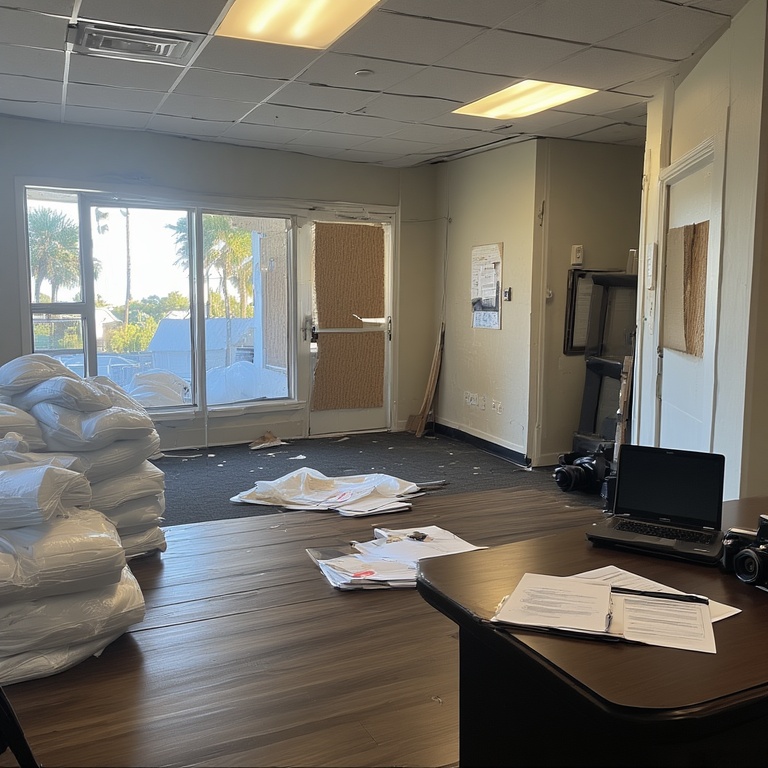
- CRITICAL DOCUMENTATION: As you undertake these efforts, meticulously document everything. Take photos and videos before, during, and after mitigation efforts. Keep all receipts for materials, services (e.g., tarping company, water extraction), and any emergency repairs. These costs are often reimbursable under your policy.
Step 2: Comprehensive Damage Documentation – Leave No Stone Unturned
This is the bedrock of your hurricane claim. The more detailed and organized your documentation, the stronger your position.
- Photos and Videos:
- Overall Shots: Start with wide-angle photos and videos of your entire property, showing the scope of the damage.
- Detailed Close-Ups: Then, zoom in on specific damaged areas. Capture structural damage (cracks in walls, foundation issues), roof damage (missing shingles, punctures, lifted membranes), water intrusion, mold, damaged equipment, machinery, furniture, fixtures, and inventory.
- Dates & Timestamps: Use a camera or phone that automatically dates and timestamps photos/videos. If not, manually record dates.
- “Before” Evidence: If you have pre-storm photos or videos of your property (e.g., from property listings, appraisals, or previous maintenance checks), gather them for comparison. This is particularly valuable for businesses in historic districts of New Orleans.
- Detailed Inventory Lists:
- Damaged Property: Create an itemized list of all damaged or lost items. For each item, include:
- Description (e.g., “Industrial freezer, Model XYZ-123”)
- Manufacturer and model number (if applicable)
- Approximate purchase date
- Estimated replacement cost (get quotes if possible)
- Proof of ownership (receipts, invoices, serial numbers, photos of the items before the storm).
- Inventory/Stock Loss: For businesses with damaged inventory, create a detailed count and value.
- Damaged Property: Create an itemized list of all damaged or lost items. For each item, include:
- Financial Records for Business Interruption (BI):
- If you have business interruption coverage, you’ll need to demonstrate lost income. Gather comprehensive financial records for at least the past 12-24 months (or longer, if your business is seasonal):
- Profit & Loss (P&L) statements
- Tax returns
- Sales records
- Payroll records
- Utility bills
- Operating expenses
- Booking histories (for short-term rentals)
- Document any lost sales, cancelled contracts, or inability to fulfill orders due to the hurricane. For businesses in Metairie that rely on steady foot traffic, this data is paramount.
- If you have business interruption coverage, you’ll need to demonstrate lost income. Gather comprehensive financial records for at least the past 12-24 months (or longer, if your business is seasonal):
Step 3: Promptly Notify Your Insurance Carrier
Time is of the essence. Delays can be used against you.
- Immediate Contact: As soon as it’s safe to do so, contact your insurance company or your broker/agent. Provide them with your policy number and a general overview of the damage.
- Communication Log: Keep a meticulous record of every interaction:
- Date and time of call/email
- Name and title of the person you spoke with
- Summary of the conversation
- Claim number provided by the insurer
- Follow up important phone conversations with a brief email confirming what was discussed.
- Method of Notification: While phone calls are good for initial contact, follow up with written notification (email or certified mail) as soon as possible to create a paper trail.
Step 4: Understand Your Commercial Insurance Policy
Before the adjuster arrives, arm yourself with knowledge about your policy.
- Request a Certified Copy: Ask your insurer for a complete, certified copy of your commercial property policy, including all endorsements, declarations pages, and exclusions.
- Key Policy Sections to Review:
- Coverage Limits: What are the maximum payouts for your building, business personal property, and business interruption?
- Deductibles: Understand your hurricane/named storm deductible. In Louisiana, these are often a percentage of your insured value, not a flat dollar amount (e.g., 2% or 5% of your building’s value).
- Exclusions: Be aware of common exclusions, especially for flood damage (which requires a separate flood policy). Insurers often try to attribute wind damage to flooding to deny claims.
- Conditions: Note any conditions for coverage, such as prompt notification or mitigation requirements.
- Business Interruption Clauses: Understand the “period of restoration,” “civil authority” coverage, and any extended business interruption provisions.
- Don’t Assume: Never assume a certain type of damage is covered or excluded. If anything is unclear, note it down to discuss with your own experts or legal counsel.
Step 5: Cooperate with the Adjuster, But Protect Your Interests
An insurance adjuster will be assigned to your claim to assess the damage. While cooperation is required, remember they work for the insurance company.
- Be Present: Try to be present for all adjuster inspections. Point out every single area of damage, using your photos and videos to guide them.
- Provide Documentation: Have all your meticulously organized documentation (photos, videos, inventory lists, financial records, mitigation receipts) readily available.
- Ask Questions: Don’t hesitate to ask the adjuster questions about their assessment, the process, and what they are recommending for repairs.
- Avoid Speculation: Stick to the facts about the damage. Do not speculate on the cause of damage or admit fault.
- Do NOT Sign a Release or Accept a Check Hastily: Do not sign any documents or accept any payment that is presented as a “final settlement” until you have thoroughly reviewed it and are certain it covers the full extent of your losses. Accepting an initial check or signing a release can waive your right to claim additional damages later.
Step 6: Get Independent Estimates and Consider Professional Guidance
Your insurer’s estimate is not the only, or necessarily the correct, estimate.
- Independent Contractors: Obtain multiple, detailed repair and replacement estimates from reputable, licensed commercial contractors specializing in the type of damage your property sustained (e.g., roofers, general contractors, equipment specialists). Ensure these estimates are comprehensive and reflect current market rates for materials and labor in your area, whether it’s St. Charles Parish or Jefferson Parish.
- Expert Appraisals: For complex claims, consider hiring independent experts like a public adjuster (who works for you), a forensic engineer (to determine the cause and extent of damage), or a forensic accountant (to accurately calculate business interruption losses). These experts can provide objective assessments that counter the insurer’s findings.
- Seek Legal Counsel: If your claim is denied, significantly delayed, underpaid, or if you suspect bad faith tactics, contact a Louisiana business insurance attorney immediately. Bloom Legal Network connects you with legal professionals who specialize in challenging insurance company practices and ensuring you receive fair compensation.
Partner with Bloom Legal Network for a Strategic Claim Process
Filing a hurricane claim for your business in Louisiana is a marathon, not a sprint. The success of your recovery depends heavily on your preparedness and proactive steps. By meticulously documenting your losses, understanding your policy, and being strategic in your communications, you significantly increase your chances of a fair outcome.
However, the reality for many businesses in New Orleans, Metairie, St. Tammany Parish, and across Southeast Louisiana is that insurance companies often make the claims process difficult. When faced with complex policy language, aggressive adjusters, or unjust denials, having an experienced legal advocate by your side is invaluable.
Our network attorneys understand the intricacies of hurricane damage claims, the tactics insurers use to underpay, and the full extent of your rights under Louisiana law. We empower you to navigate this challenging period with confidence, ensuring your business secures the maximum compensation needed to fully rebuild, restore operations, and thrive.
Ready to ensure your hurricane claim is filed the right way and fully covers your business losses? Contact Bloom Legal Network today for strategic legal guidance.
📞 Call us at 504-599-9997 📧 Email us at info@bloomlegal.com
Let us help you protect your investment and build a resilient future for your business in Louisiana.
Frequently Asked Question
The most crucial step is comprehensive and meticulous documentation. Before you even file, take extensive photos and videos of all damage, from wide-angle shots of your property to close-ups of specific issues like roof damage, water intrusion, or damaged equipment. Create a detailed, itemized list of all losses, including estimated replacement costs and any available proof of ownership (like receipts). Keep all receipts for temporary repairs or mitigation efforts. The more evidence you have, the stronger your position will be when negotiating with your insurance company.
Do not accept a lowball offer or sign any release documents without a full review. An insurance company’s estimate is not the final word. You have the right to get your own independent estimates from reputable commercial contractors who can provide a more accurate cost for repairs in your area. For complex claims, consider hiring a public adjuster or a forensic engineer to provide an objective assessment. If your insurance company still refuses to offer fair compensation, you should consult with a Louisiana business insurance attorney. They can help you challenge the low offer and fight for the full amount your business is owed.
A “named storm deductible” is a specific deductible in your commercial insurance policy that applies to damage caused by a hurricane or other named storm. In Louisiana, this is often a percentage of your insured property’s value, not a flat dollar amount. For example, if your building is insured for $500,000 and you have a 2% named storm deductible, you will be responsible for the first $10,000 in damages. This is different from the standard flat-rate deductible for other types of claims. It’s critical to understand this deductible amount before filing your claim so you are prepared for your share of the costs.